














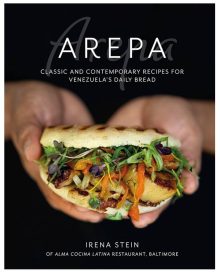
En *Arepa: Classic & Contemporary Recipes for Venezuela’s Daily Bread*, la chef y autora venezolana Irena Stein presenta la arepa no solo como un alimento, sino como un símbolo profundo de identidad, pertenencia y memoria cultural.
Antes de entrar en recetas, Stein dedica un espacio significativo a contar la historia de la arepa, desde su origen indígena hasta su papel moderno en la diáspora venezolana.
Su narrativa histórica tiene tres ejes fundamentales: ancestralidad, permanencia y unión cultural.
- Un alimento que precede a la colonia
Stein destaca que la arepa es uno de los alimentos más antiguos del continente americano. Su origen se remonta a los pueblos indígenas que habitaban el territorio que hoy es Venezuela —particularmente los timoto-cuicas, caribes y arahuacos— quienes ya molían el maíz y lo cocinaban en forma de discos planos sobre budares de barro.
- El maíz como corazón espiritual y cultural
Stein subraya que el maíz simbolizaba fertilidad, vida y comunidad. La arepa hereda ese carácter sagrado y cotidiano a la vez, funcionando como un puente cultural que une el pasado indígenario con el presente venezolano.
- La transformación en la Venezuela moderna
La autora explica cómo la arepa se convirtió en el pan diario del venezolano, destacando su papel familiar y cultural, y la importancia de la llegada de la harina de maíz precocida, que transformó su preparación en la vida cotidiana.
- La arepa como emblema de la diáspora
Stein describe cómo la arepa ha viajado junto a millones de venezolanos, convirtiéndose en un alimento que evoca hogar, nostalgia y arraigo. Hoy se sirve en ciudades de todo el mundo como símbolo de identidad culinaria.
- La arepa como acto de amor y resistencia
La preparación de la arepa es descrita como un “ritual cotidiano” que expresa amor, cuidado y resistencia cultural. Hacer arepas es mantener viva la memoria familiar, transmitir tradiciones y construir comunidad.
Conclusión
Irena Stein presenta la historia de la arepa desde un enfoque profundamente humano y cultural. Su obra destaca cómo la arepa encarna identidad, continuidad histórica y afecto familiar, convirtiéndose en un puente emocional para millones de venezolanos dentro y fuera del país.
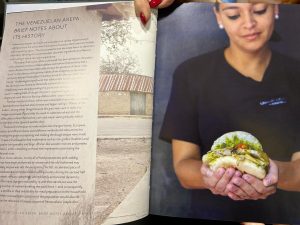
The History of the Arepa According to Irena Stein
In Arepa: Classic & Contemporary Recipes for Venezuela’s Daily Bread, Venezuelan chef and author Irena Stein presents the arepa not merely as a food, but as a powerful symbol of identity, belonging, and cultural memory.
Before introducing her recipes, Stein dedicates a significant section of the book to recounting the history of the arepa—from its Indigenous origins to its modern role in the Venezuelan diaspora.
Her historical narrative is organized around three central themes: ancestry, permanence, and cultural unity.
- A Food That Predates the Colonial Era
Stein highlights that the arepa is one of the oldest foods in the Americas. Its origin traces back to the Indigenous peoples who inhabited what is now Venezuela—particularly the Timoto-Cuicas, Caribs, and Arawaks—who ground corn and cooked it into flat discs over clay budares.
For centuries, this method formed part of daily life and survived cultural shifts, making the arepa a rare example of a pre-colonial food that remains essential today.
- Corn as the Spiritual and Cultural Heart
Stein emphasizes that corn symbolized fertility, life, and community among Indigenous groups. The arepa, rooted in this sacred ingredient, inherited both its spiritual meaning and its everyday practicality.
She explains that the arepa functions as a cultural bridge connecting Venezuela’s Indigenous past with its contemporary national identity.
- The Arepa in Modern Venezuela
Stein describes how the arepa became Venezuela’s daily bread, present across households of every region and social class. She highlights:
- Its place in family and national culture
The arepa’s versatility—asada, frita, horneada; thin or thick; plain or stuffed—allowed it to adapt to regional tastes and become a unifying element of Venezuelan cuisine.
- The arrival of pre-cooked corn flour
Stein notes that the introduction of industrially processed corn flour in the mid-20th century transformed domestic cooking by making arepa preparation faster and more accessible, solidifying its role in Venezuelan daily life.
- The Arepa as a Symbol of the Diaspora
One of the most poignant aspects of Stein’s narrative is her portrayal of the arepa as a defining emblem of Venezuelan migration.
She explains how the arepa has traveled with millions of Venezuelans around the world, becoming a food that evokes home, belonging, and nostalgia.
Today, arepas are served in cities across the globe, introducing Venezuelan culinary identity to new audiences.
- The Arepa as an Act of Love and Cultural Resilience
Stein describes preparing arepas as a “daily ritual” that expresses love, care, and cultural resilience.
Making arepas is, in her view, a way of keeping family memories alive, preserving traditions, and building community—especially far from home.
Conclusion
Irena Stein presents the history of the arepa through a deeply human and cultural lens. Her work highlights how the arepa embodies identity, ancestral continuity, and emotional connection, becoming an enduring symbol for millions of Venezuelans both inside and outside their homeland.